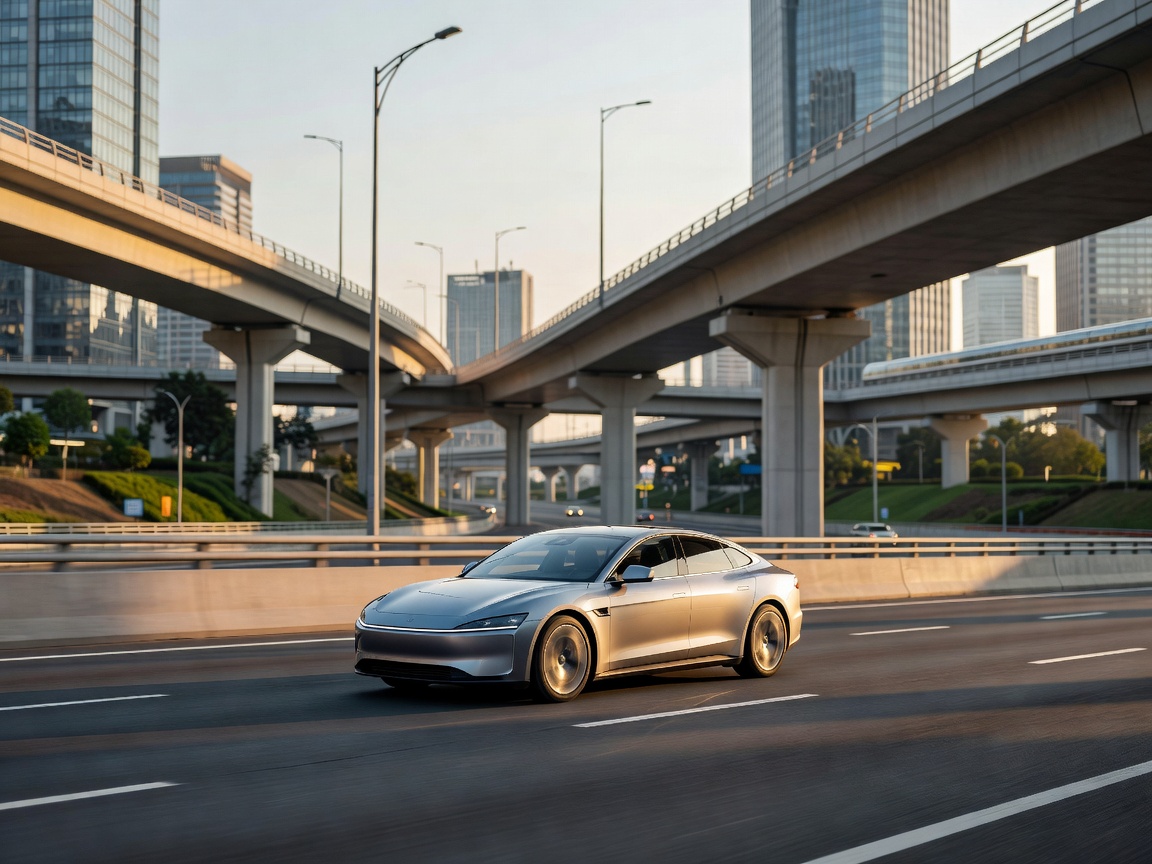
Future mobility is not a single technology waiting to arrive. It includes automation research, software-defined vehicles, shared travel, connected infrastructure, smart charging and logistics. Each idea has a different maturity, purpose and set of dependencies. Distinguishing a concept from a broadly available service is essential.
Assistance is not autonomy
Driver assistance supports a human who remains responsible for supervising the vehicle. Automated-driving research explores systems that may perform more of the driving task under defined conditions. A highly automated system may have a specific operational design domain—a set of roads, weather and situations in which it is designed to operate. Terminology and legal frameworks differ, so a label alone does not establish who is responsible or where a feature can be used.
Fully autonomous driving is often discussed as a future concept, but it should not be treated as universally available. Capabilities may be limited to trials, constrained areas, particular conditions or specific regulatory approvals. Public descriptions can change as systems develop. Check official, current information and local law before assuming a vehicle can operate without a driver.

Software-defined vehicles
The term software-defined vehicle describes a direction in which software increasingly coordinates vehicle functions and can be updated over time. This can support evolving interfaces or functions, but it also raises questions about security, reliability, long-term support and ownership. A capability may depend on hardware, subscriptions, network access or regional approval; an update does not automatically make every vehicle equivalent.
Software has to work alongside physical components, safety processes and maintenance. Owners should ask how updates are delivered, how failures are handled and what functions remain available if a connected service ends. Manufacturers' support policies and market rules change, so check current terms for the exact vehicle.
Shared mobility and service models
Shared mobility ranges from conventional car sharing to app-based ride services and integrated public-transport planning. Mobility-as-a-service aims to combine different travel modes or booking options through a service interface. Such models may offer alternatives to owning a vehicle for every journey, but availability, accessibility, cost and convenience depend on local conditions. They should not be assumed to replace a private car or public transport everywhere.
In cities such as Amsterdam, Stockholm, Munich and Paris, mobility discussions take place within very different street layouts, public transport systems and policy settings. These cities are useful examples of varied urban contexts, not proof that one transport approach transfers unchanged to another place.
Smart charging and vehicle-to-grid ideas
Smart charging can schedule or modulate charging in response to user preferences, energy tariffs or grid conditions where compatible services exist. Vehicle-to-grid (V2G) describes a concept in which a compatible vehicle can return energy to an electricity system. It requires suitable hardware, agreements, controls and regulatory conditions. It should not be assumed to be supported by a particular car, charger or home connection without verification.
These approaches link transport with energy infrastructure. Their practical value depends on the user's mobility needs, battery use, local network arrangements and commercial terms. Verify current functionality and potential impacts on warranties or energy agreements before relying on an advertised capability.
Connected infrastructure and logistics
Connected infrastructure can include traffic signals, roadside communications, digital mapping and systems that share selected information. Such links may support coordination, but a vehicle should not be assumed to depend on every road providing real-time connectivity. Coverage, interoperability, maintenance and cybersecurity are significant considerations.
Logistics automation includes technologies used to plan routes, manage warehouses or assist vehicle operations. Automation can take different forms and levels, from software planning tools to controlled-site vehicles. It raises questions about safe operating areas, worker roles, accountability and system resilience. A demonstration in a constrained environment is not equivalent to unrestricted public-road capability.
Potential gains and real constraints
Potential benefits
- More coordinated travel and service options.
- Automation may support defined tasks in suitable environments.
- Smart charging can connect transport planning with energy use.
- Software may make selected systems adaptable over time.
Open challenges
- Infrastructure and connectivity are uneven.
- Cybersecurity, regulation and responsibility remain central.
- Public acceptance depends on trust and understandable operation.
- Access, affordability and ownership models differ by place.
Good for / what to know
Good for: readers exploring how transport systems may evolve beyond one private vehicle. What to know: ask whether an example is research, a limited pilot or a commercial service; understand its operating area, human oversight and legal status. Benefits depend on thoughtful deployment and inclusive infrastructure, not technology alone.
Availability and regulation can change. This guide does not claim that autonomous driving is universally available, nor does it endorse a provider. Confirm all current operational, legal and commercial details independently.
Related guides
Keep exploring
Map the questions behind mobility.
Suggest a technology topic or ask us to clarify a term.